
Measles in America: Five things to know from a Stanford Medicine expert
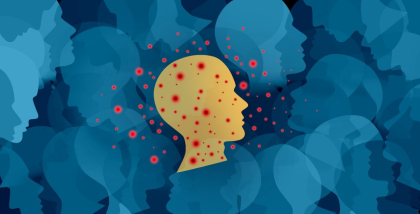
The U.S. measles surge is a sign that more vaccination is needed, said a Stanford Medicine pediatric infectious disease physician. Here’s what else she wants you to know.
fter a sustained surge of measles outbreaks last year, the United States is likely to lose its status as a country that has eliminated the highly infectious disease.
“Losing that designation means we are seeing ongoing domestic spread of measles, which we’ve failed to stop over the course of a year,” said Stanford Medicine’s Sruti Nadimpalli, MD MPH, clinical associate professor of pediatrics and a specialist in pediatric infectious disease.
“Elimination” of a disease means there has been no sustained transmission within a country for at least a year, although sporadic cases may still be brought in by international travelers. Loss of elimination status signals that the United States has significant gaps in measles vaccination and outbreak control, according to Nadimpalli.
“It’s not good news,” she said. “But the upside is that there’s still a lot we can do to halt the spread and keep kids and vulnerable populations safe. Vaccination is the most important strategy.”
Nadimpalli believes everyone needs to be aware of the disease, which is still spreading. Over the last year, the country had 49 outbreaks spanning nearly every state in the country. Here, in her own words, are the most important things to know.
1. A decrease in vaccine uptake is causing the measles resurgence
Measles is one of the most contagious diseases: Among people without immunity, 90% of those exposed to a case will get sick. (In comparison, between 4% and 12% of unvaccinated people exposed to a case of influenza will develop symptoms.)
The measles virus spreads stealthily. Infected people are contagious for several days before showing symptoms. The virus is transmitted through the air. Viral particles can remain airborne in a room and cause infection for several hours after an infected person has left.
To stop the spread, 95% of the population needs the two-dose vaccine, but many U.S. communities now have lower rates of vaccine coverage. The doses are normally given to children at 12 months of age and around their fifth birthday, though the second dose can safely be given as little as 28 days after the first if someone needs to get caught up quickly — as in an outbreak scenario,
Federal, state and local departments of public health publish data that shows where measles is spreading. The California Department of Public Health tracks activity across the state; the U.S. Centers for Disease Control and Prevention publishes weekly updates on measles numbers. In 2025, the U.S. had 2,255 confirmed cases of measles, nearly eight times as many as in 2024.
2. A case of the measles is no mild condition
Measles typically starts with a fever and respiratory symptoms and sometimes red, watery eyes. Then the person develops a rash that begins on the face and spreads to the rest of the body. It can cause serious complications, both short- and long-term.
In the short run, we worry most about pneumonitis, which is infection deep in the lungs; neurologic disease, called encephalitis; miscarriage in pregnant patients; and death.
Months or years after recovering from a bout of measles, people can develop two severe complications: measles inclusion body encephalitis, a form of brain inflammation that often kills patients, and subacute sclerosing panencephalitis, a progressive brain disorder that is almost uniformly fatal. Although these are not common, they do occur, and we can prevent them with vaccination. Neither of these later complications has any effective treatment, so prevention is key.
All measles patients also experience a suppressed immune response for several weeks to a few months after they have the disease, leaving them more vulnerable to other infections. This happens because measles interferes with the infection-fighting ability of T cells, a key part of the immune system. It also infects and destroys memory B and T cells that “remember” prior infections which further increases risk.
3. There are no antiviral treatments to mitigate measles symptoms
For high-risk people who can’t be vaccinated — very young babies, pregnant people, immunocompromised individuals — we can give intravenous immunoglobin, an antibody pooled from multiple blood donors. It can prevent the disease from developing after someone is exposed.
Measles doesn’t have a specific treatment. We offer supportive care, but we don’t have medications for it. Though researchers have tested several different antivirals, nothing has worked well. It’s different from something like chickenpox or COVID-19 where we have effective antivirals to reduce the length and severity of symptoms. Preventing measles with vaccination really is the most successful strategy.
4. Measles vaccination is safe and essential to keeping loved ones healthy
The measles vaccine is very safe and effective, the best protection we have against measles.
For people who can’t be vaccinated, such as babies, pregnant individuals, and people who are immunocompromised, we recommend what we call cocooning: Parents, other household members and caregivers of the vulnerable person should all be vaccinated to create a layer of protection around them. They should also limit exposure to crowded or high-risk settings during outbreaks and reach out to a physician promptly if they suspect exposure.
If a family with an infant needs to travel to an area with a measles outbreak, early vaccination can be considered for babies as young as six months.
As an infectious disease physician, I’m always dispelling myths about measles and vaccines. There is no data to show that vaccines cause autism; a lot of smart people have researched this deeply and there are no data to connect the two. If there were, as a community, pediatricians would not just ignore it.
There’s also a misconception that measles is just a routine childhood infection, that it’s not consequential. In reality, it suppresses the immune system and the potential complications are very serious, including severe debility and death.
5. Your immunity to measles depends on when you were born
If you were born before 1957, we assume you are immune because the infection was so prevalent before the vaccine became available. Vaccination records or documentation of a prior infection can also serve as proof of immunity. There is also an antibody-based blood test we can use to check for immunity.
People vaccinated on the current schedule — two childhood doses — are considered protected. This generally includes those born in 1990 or later.
Adults born between 1957 and 1989 may have received only one dose of measles vaccine. A single dose was recommended from 1963, when the vaccine was introduced, until 1989, when it changed to two doses. People in this group may benefit from a second dose depending on their age; risk factors; occupational exposures, such as working in health care; and travel plans. There are nuances to consider, so it’s best to check with your doctor.
Last news
The U.S. measles surge is a sign that more vaccination is needed, said a Stanford Medicine pediatric infectious disease physician. Here’s what else she wants you to know Read more...

The risk that alcohol poses to women’s health has mounted over the last two decades, as women have begun to drink more frequently and in larger quantities Read more...

Oklahoma City surprises with plans for the tallest building in the US. A symbol of growth, it will offer unique attractions for visitors. Read more...

New restaurant Malka named after Tel Aviv eatery, trying to bring more Israeli and Jewish food and atmosphere to New York with kosher food. The reservation list is already full. As for the prices, it depends on who's asking Read more...

Some New Year's Eve revelers say you can't put a price on the experience of watching the Times Square ball drop live and in-person on December 31 Read more...
Looks like it's all a lie Or not? Where is the real master of his craft? Read more...

Honda is recalling more than 2.5 million cars because the fuel pump inside the fuel tank may fail, causing the vehicles to stall while driving and increasing the risk of a crash, according to the National Highway Traffic Safety Administration Read more...